
How Our Log Cabin Logs Are Made, From the Mill to Your Jobsite
Every log home starts as a vision. Long before the first wall goes up, though, it starts with the wood. The log cabin logs that arrive on your jobsite decide how tightly your walls fit, how much your home settles, and how well it holds up for decades. That is why we never rush them.
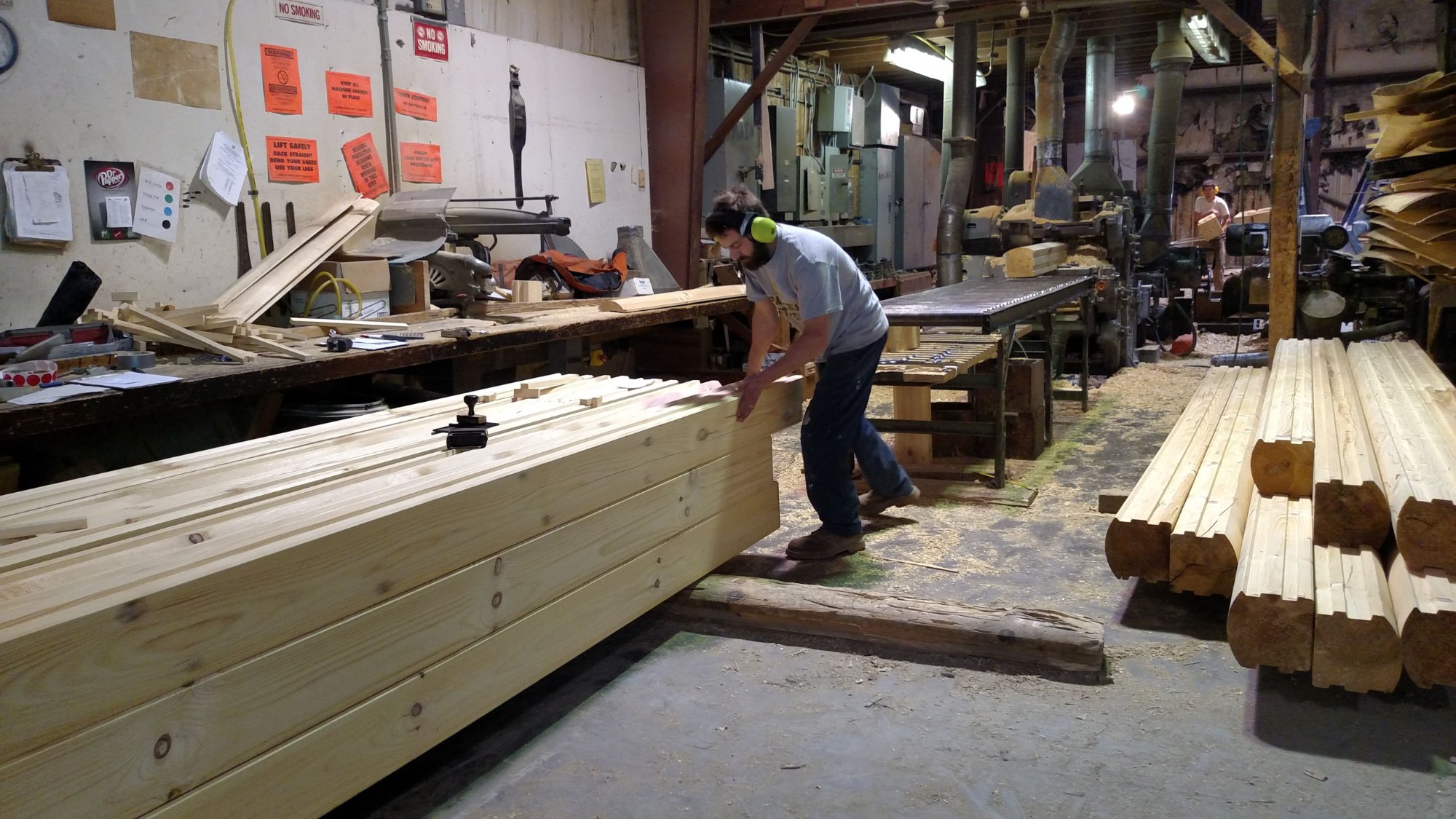
At Log Cabin Supply, every log in your package comes out of our own mill, tucked beside a creek in a mountain valley in Boone, North Carolina. We air dry it, kiln-dry it, machine it to the profile you chose, and cull anything that does not meet our standard before it ships. Here is exactly how that works, one step at a time.
Have plans ready? Send us your plans and we will build your materials list.
What Makes a Good Log Cabin Log?
A good log cabin log is dry, straight, milled to a consistent profile, and free of defects that could weaken a wall or open a gap. Moisture is the big one. Wood shrinks as it dries, so logs that go into a wall too wet keep moving after the home is built. The USDA Forest Products Laboratory explains this movement in its Wood Handbook.
Gary Campbell, who leads our team, learned this firsthand when he and his father built his own log home. He still lives in it today.
"In order to build a proper log home, you must have good dry material along with a good builder," Gary says. "This combination is the key to a successful log home build."
Our process is built around that idea. Here is the path every order follows:
We review your plans and build your materials list
Step 1
We source our timber from the regions where it grows best
Step 2
We air dry the logs, then kiln dry them
Step 3

We mill each log to the profile you chose
Step 4

We cull more than 10% of logs for quality
Step 5
We package and ship to your jobsite
Step 6
We help you connect with the right builder
Step 7
Step 1: We Start With Your Plans
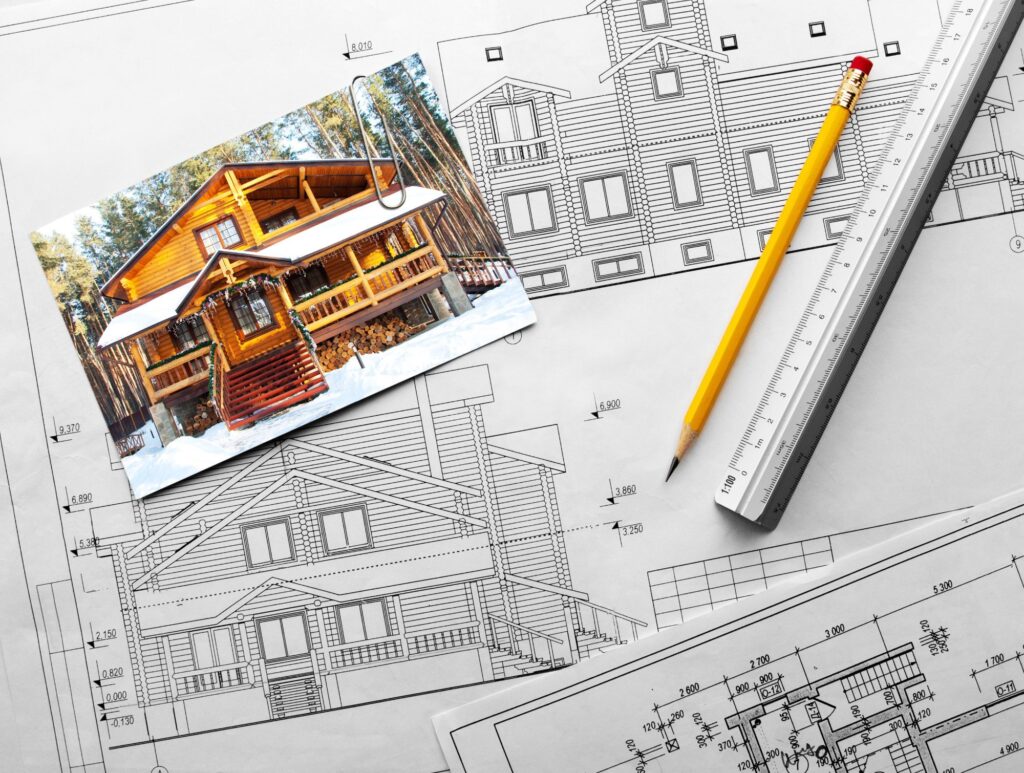
Nothing gets cut until we understand your home. You start by filling out a short client questionnaire and sending us your drawings or your builder's materials list.
From there, we build a materials list and a quote based directly on your plans. Once you approve it, we confirm the order, take payment, and move into production.
A typical custom material package covers the specialty parts of your home: the log wall system, the timber frame roof system, the loft system, and the porch roof system. We keep it that way on purpose. Framing lumber and other everyday materials are usually cheaper at your local building supplier, and it makes no sense to pay a log home company more for them. We focus on the parts that only a mill can make well.
Step 2: Where Our Log Cabin Logs Come From
Good logs start with good timber. We stock three species, and each one comes from the region where it grows best.
Eastern White Pine comes from the mountains and foothills around us, stretching from Western North Carolina to East Tennessee and Southwest Virginia. Local loggers harvest the trees, which are circular sawed into rough-sawn timber cants. Those square timbers are bundled, loaded onto flatbed trucks, and brought to our mill.
Douglas Fir and Western Red Cedar travel from the Northwest. Our Douglas Fir comes mainly from sawmills in Oregon and Washington, and our Western Red Cedar comes mainly from sawmills in British Columbia, including Vancouver Island.
Step 3: Air-Dried, Then Kiln-Dried Log Cabin Logs
This is the step that sets our logs apart, because we take the slow road on purpose.
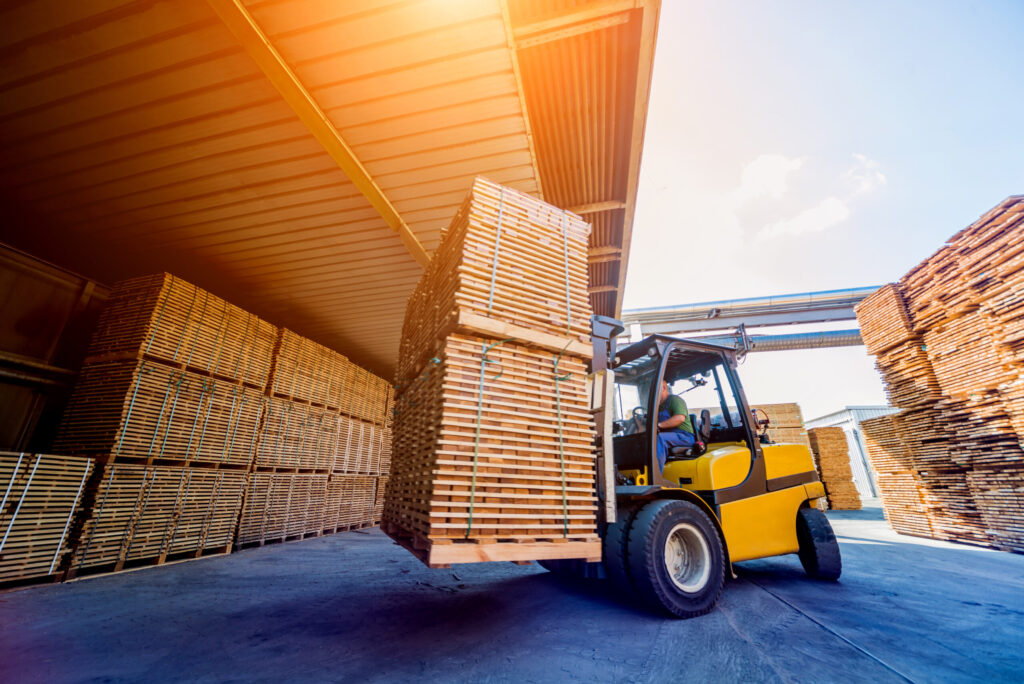
Air drying comes first. We spend a great deal of time air-drying our logs before they ever see a kiln. When the timbers arrive, we stack them on sticks so air can move around every piece, then move them into our sheds and out onto the yard to dry. Letting the wood give up its moisture slowly helps it settle into its natural shape.
Then we kiln-dry. After air drying, the timbers go into one of our two large dry kilns, where most of what we offer dries for roughly 30 days. That brings the moisture content down. Kiln drying lets us control moisture content and reduce shrinkage, so your walls stay tighter once they are stacked. Once dried, the wood is stored in our sheds until it is milled into your order. Why does this matter for you? Dry logs move less after the home is built. That means fewer gaps to chase, less settling to plan around, and a log home that looks the way it was designed to look. If you want to dig deeper, Reliance Timber covers the science behind this step in its guide to the moisture content of wood.
Step 4: Log Milling to the Profile You Chose
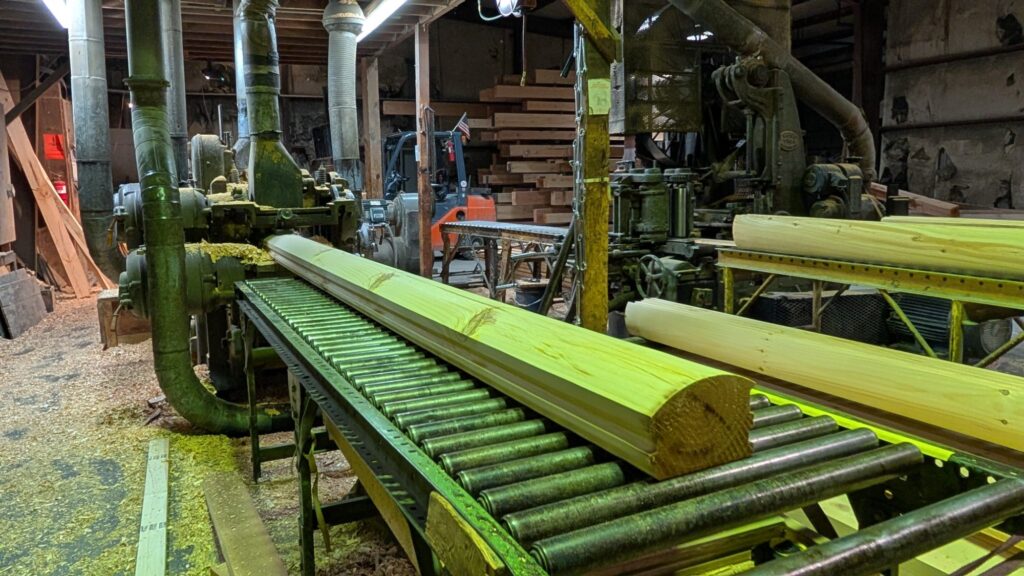
Once the logs are dry, we machine them into whatever style of log you want. Your design, our logs. We saw timbers to size on industrial bandsaws, then run them through industrial planers to machine each one into its final shape. For log walls, that means double tongue and groove logs that lock together course by course.
We mill round logs, D-logs, square logs, square chink, and German chink profiles. Gary chose 8x12 D-logs with dovetail corners for his own home, so he is always happy to talk through that decision with you.
Every log can also be finished in the texture that fits your style:
- Smooth
- Rough sawn
- Hand hewn
- Draw knife
We cut each joint in-house for a tight fit and long-lasting durability, with dovetail, saddle notch, butt-and-pass, and post corner options. We stock Eastern White Pine, Douglas Fir, and Western Red Cedar and can special-order Southern Yellow Pine, Cypress, Red Oak, and White Oak.
Want a more rustic look? We also draw-knife and hand-hew our logs, so your walls carry the marks of real handwork.
Step 5: Culling for Quality
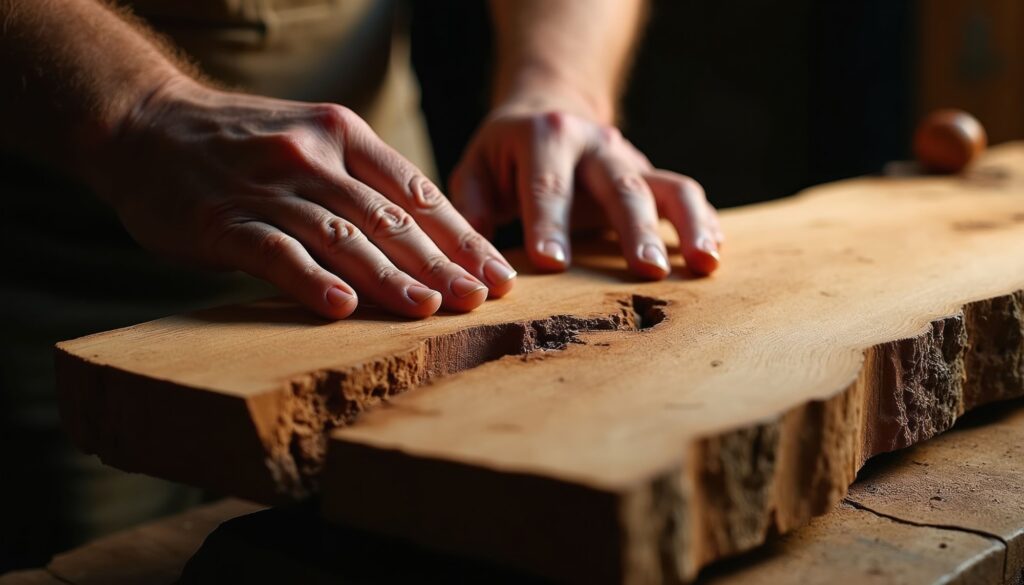
Here is a number we are proud to share. More than 10% of our logs are culled out for quality before anything ships. Those logs never leave the mill as part of your package.
Every log gets a close look before it's cleared for your package. If a log has cracks, a twist, loose knots, or anything else that could weaken a wall or keep it from sitting tight, we pull it. The rule is simple. Nothing but the best quality logs go to your jobsite.
Step 6: Packaged and Shipped to Your Jobsite
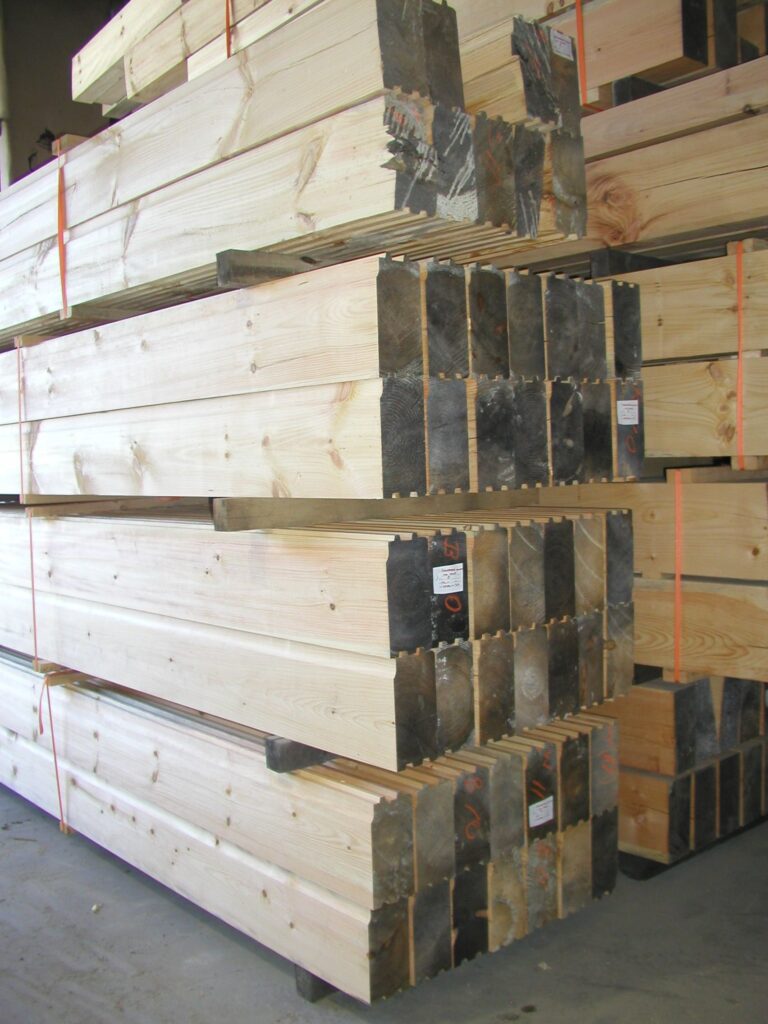
We cut, package, and ship everything ourselves. Once your order is processed, each bundle is wrapped in a protective, tarp-like cover to keep the weather off the wood. Finished orders wait in our staging area, ready for you to pick up or for us to ship out.
Our lead times typically range from 2 to 4 weeks once your order is confirmed. We handle delivery within our usual 500-mile radius and work with outside shipping companies beyond that, so we ship all around the world. No destination is too far.
Whether you are building in the Blue Ridge or across an ocean, your logs come from the same mill.
Step 7: Connecting You With the Right Builder
Good logs only go so far without a good builder. If you do not have one yet, we help you find the right fit through local home builders associations, chambers of commerce, and building suppliers in your area. They know the builders who do quality work.
Once you choose your builder, we work with them directly on your materials list and delivery. That keeps your build moving and keeps everyone working from the same list.
Come See the Mill
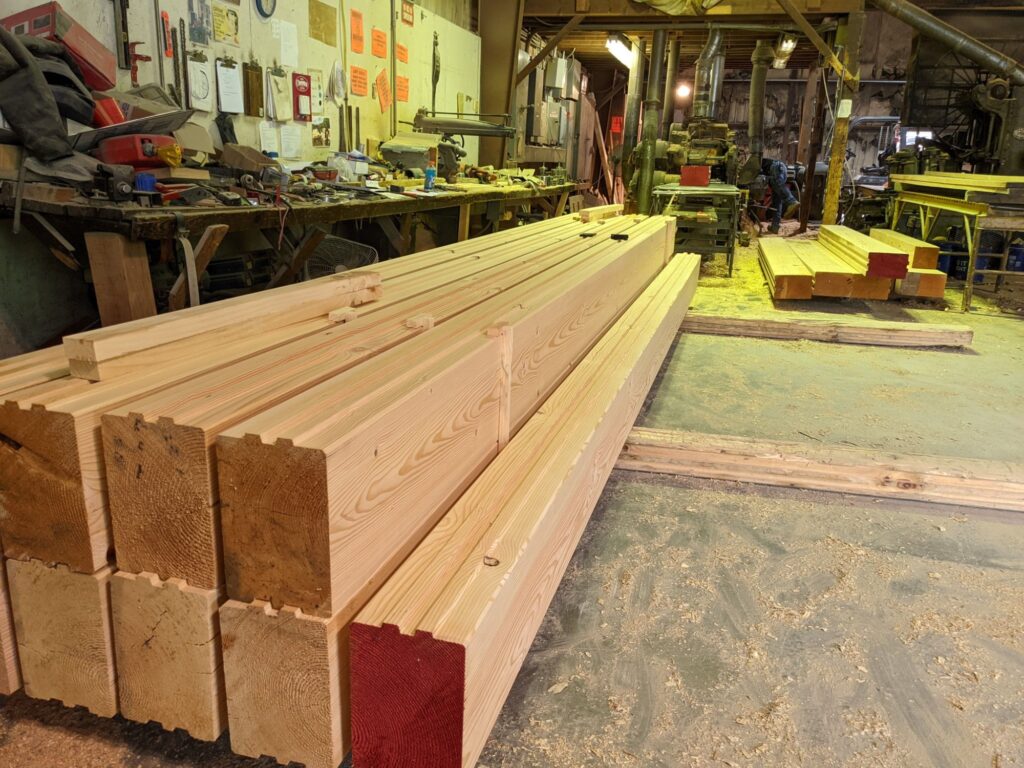
We welcome visitors Monday through Friday. Making an appointment is always a good idea, so we have proper time to walk you through the process in person.
Our Story: Milling Log Cabin Logs in Boone Since 1986
Our story started in 1986, when Boone Custom Forest Products opened beside a creek in a mountain valley in Boone, North Carolina. The area needed a White Pine mill, and BCFP answered the call.
Over the years, the mill kept growing. We added Western Red Cedar and Douglas Fir to our inventory, built more storage buildings, and brought in more machines and trucks. As the company grew into a new century, it took on new names, Reliance Timber and Log Cabin Supply, so we could share the wood being made in our valley with more people.
Today, our wood reaches homeowners and builders around the world. The mill still sits in the same valley, and when you order from Log Cabin Supply, you work directly with the people who make your logs. There is no middleman between your plans and the mill. We are powered by Reliance Timber, and Gary Campbell, who leads our team, has been learning the sawmill trade since 2003.
Log Cabin Logs Frequently Asked Questions
Yes. We air dry our logs first and then kiln dry them before milling them into your chosen profile.
A log cabin starts with a set of plans. A mill dries and machines logs to a chosen profile, then a builder stacks the log walls on a standard foundation and adds the roof, loft and porch systems.
We make round logs, D-logs and square logs, along with square chink and German chink profiles. Each one creates a different look inside and out, and we can help you choose.
We stock Eastern White Pine, Douglas Fir and Western Red Cedar. We also special order Southern Yellow Pine, Cypress, Red Oak and White Oak.
Our Eastern White Pine comes from the mountains and foothills of Western North Carolina, East Tennessee, and Southwest Virginia. Our Douglas Fir comes mainly from sawmills in Oregon and Washington, and our Western Red Cedar comes mainly from sawmills in British Columbia, including Vancouver Island.
Our lead times typically range from 2 to 4 weeks once your order is confirmed and placed.
No. We supply a custom material package cut to your plans. Your design comes first, and we mill the logs to match it.
Ready to Build With Our Log Cabin Logs?
Your design, our logs. Send us your plans, and we will put together a materials list and quote for log cabin logs milled for your home. Have questions first? Talk with our team. We know the way, and we would love to help you build it together.